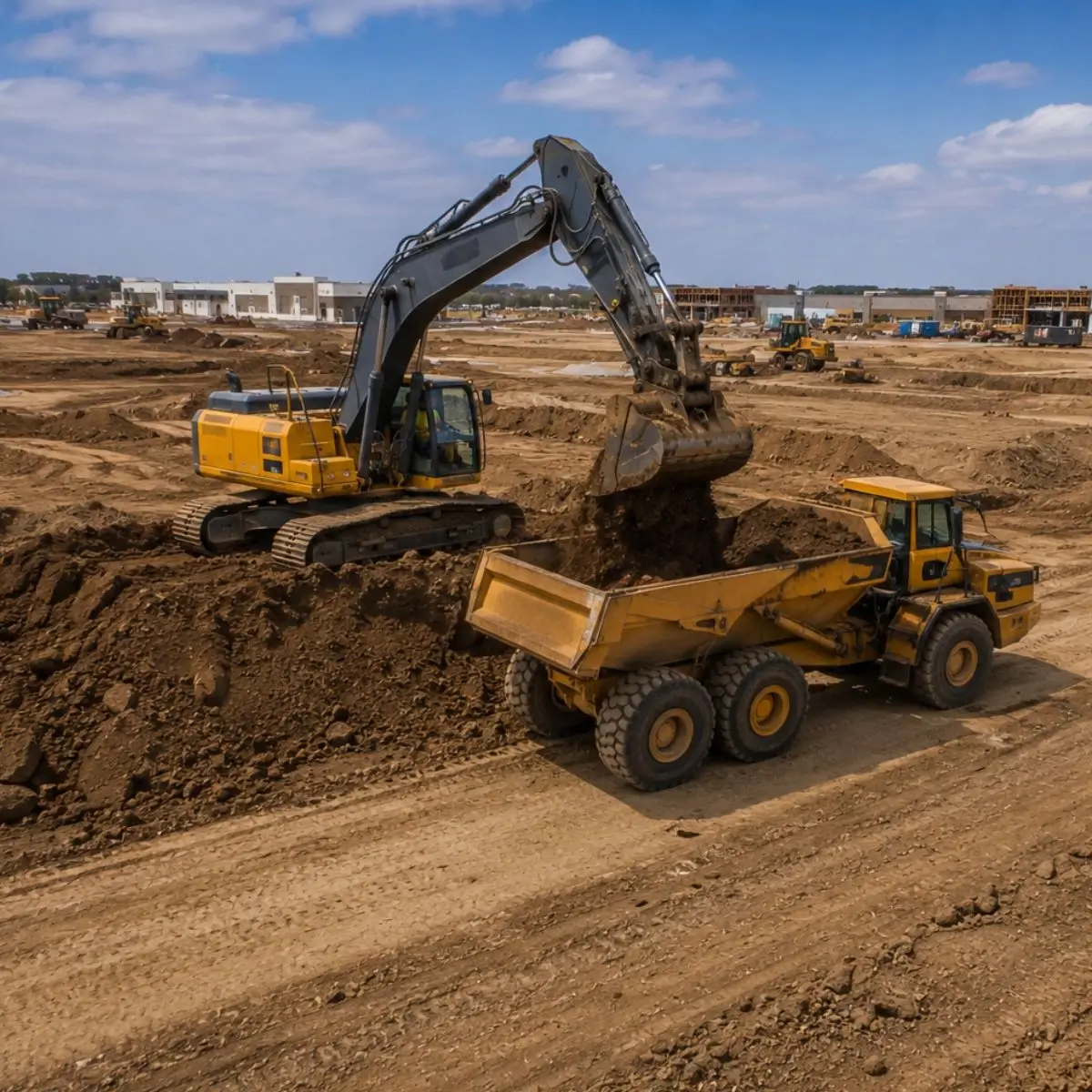
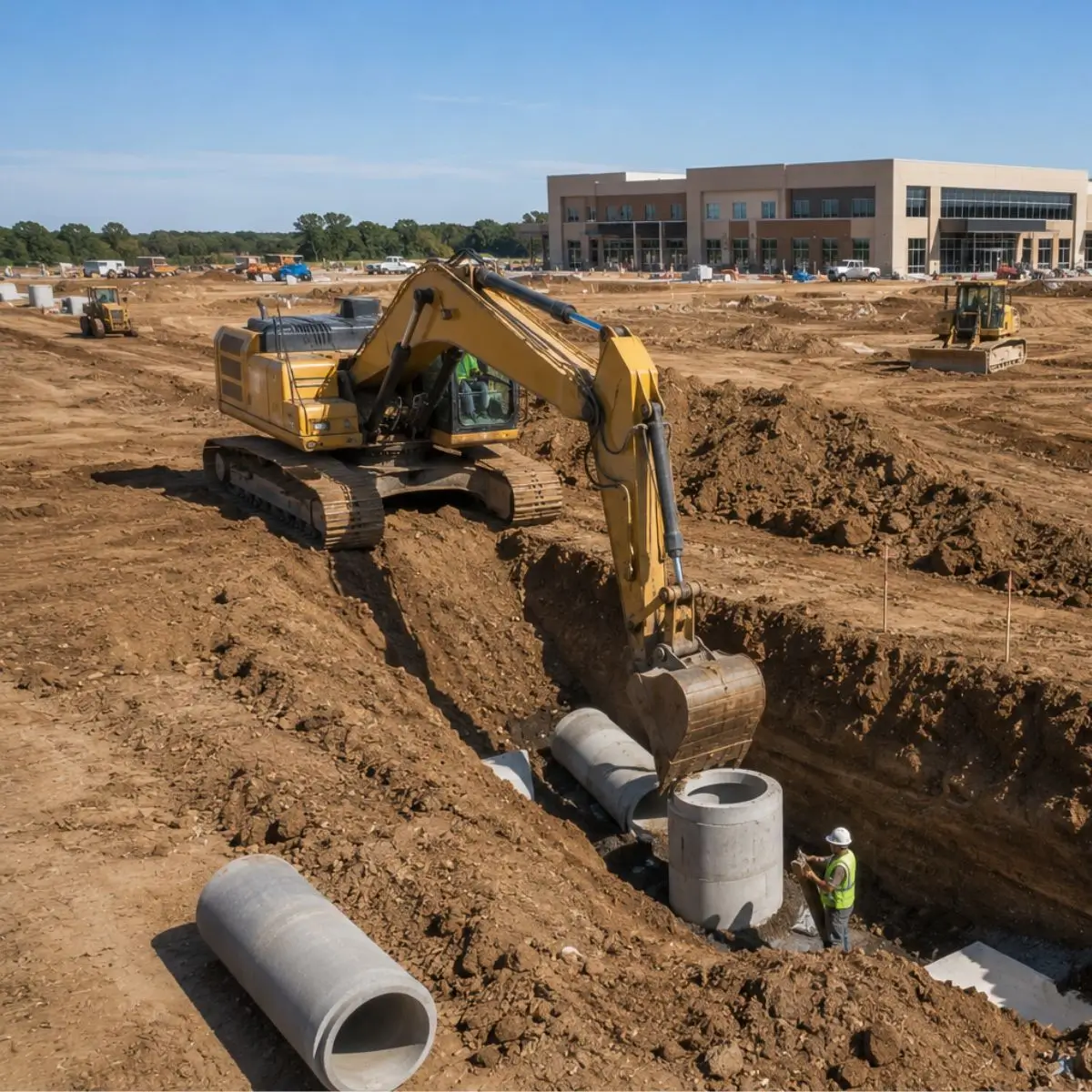
Excavation · North Texas

Excavation Services in Dallas-Fort Worth & North Texas

Digging to the plan, keeping crews safe below grade, and putting back ground that will carry what goes on top. IRONWILL Earthworks handles mass excavation, foundation cuts, utility trenching and backfill across the metroplex.
Mass excavation
Foundation excavation
Utility trenching
Backfill & compaction
Haul-off & import
Dallas-based

Short mobilization across the metroplex

Dug to the plan

Depths and grades checked, not eyeballed

Safe below grade

Protective systems before anyone goes in

Excavation through site prep

One contractor from dig to build-ready

Where the structure starts

Excavation is easy to start and expensive to get wrong.

Excavation is where a project goes below the surface: the cuts, foundations, trenches and ponds that everything above them depends on. It is also where the most expensive surprises live, including a line that was not on the drawings, a trench wall that lets go, or backfill that settles under a slab a year later.
IRONWILL Earthworks is a veteran-owned North Texas earthwork contractor. We excavate to the plan, put protective systems in before anyone works below grade, balance material on site where the design allows, and hand the work straight into grading, pad preparation and paving subgrade.
Below: what excavation covers, how it differs from grading, what we include, how trenches are kept safe, what has to happen before the first bucket, and how the work sequences. If you have a site to excavate, send us the details.
Definition

What is excavation?

Excavation is the removal of soil and rock below the existing ground surface to make room for something: a foundation, a basement or below-grade structure, a utility line, a detention pond, or a building pad that needs unsuitable material taken out. On a construction site it follows clearing and runs alongside grading.
The word covers very different jobs. Mass excavation moves large volumes across a site. Structural excavation cuts footings, grade beams and below-grade structures to tight tolerances. Trenching opens narrow, deep cuts for water, sewer, storm and dry utilities. Each one has its own equipment, its own safety rules and its own way of going wrong.
What they share is that the hole is only half the job. How the bottom is prepared, how the walls are supported while it is open, and how it is backfilled decide whether the work above it performs.
Often confused

Excavation vs. grading — what’s the difference?

Grading shapes the surface. Excavation goes below it. Most sites need both, and they are cheapest when they are planned together.

Excavation

Soil and rock are removed below existing grade to a designed depth and shape: foundations, trenches, ponds, basements and undercuts. Tolerances are tight, walls may need support, and the bottom usually has to be approved before anything goes in.

Grading

The surface is reshaped to design elevations and slopes: cutting high areas, filling low ones and building drainage into the finished grade. It works across the whole site rather than down into it. See commercial site grading.

Which one you need — IRONWILL

Almost every commercial site needs both. The grading plan sets the finished surface; the excavation scope covers everything cut below it, from footings and utility trenches to detention ponds and undercuts of unsuitable soil.
Planning them together is where the savings are. Material from excavation can often become grading fill instead of trucked-off spoil, and sequencing the cuts around the grade avoids digging through ground that was just compacted.
Scope

What our excavation includes

Mass excavation and cut-to-fill

Large-volume cuts moved across the site to where the design needs fill, with haul distances and compaction planned before the first load.

Building and foundation excavation

Footings, grade beams, pits and below-grade structures cut to the structural drawings, with bottoms prepared for inspection.

Utility trenching

Trenches for water, sewer, storm and dry utilities, opened to line and grade with protective systems where the depth requires them.

Backfill and compaction

Backfill placed in lifts and compacted to the project specification, so trenches and foundation walls do not settle under paving, slabs or landscaping.

Over-excavation and undercut

Unsuitable or expansive soil removed below pads and paving where the geotechnical report calls for it, and replaced with approved fill.

Haul-off, import and spoil management

Spoil balanced on site where it can be, hauled off where it cannot, and select fill imported when the design calls for it, with the site staged for grading rather than dotted with stockpiles.
Below grade

Nobody goes in a trench until the walls are handled

Trench collapses give almost no warning, and North Texas clay can look solid right up until it gets wet. OSHA requires a protective system in any trench 5 feet or deeper unless it is cut in stable rock, and trenches deeper than 20 feet need a system designed by a registered professional engineer.
The protective system is chosen from the soil, the depth and the space available: sloping or benching where there is room, and shields or shoring where there is not. A competent person inspects the excavation every day and after every rain.

Utilities located and marked through Texas 811 before digging

Soil classified by a competent person, not assumed

Protective systems in trenches 5 feet and deeper

Spoil and equipment kept at least 2 feet back from the edge

Ladders or ramps within 25 feet of workers in trenches 4 feet deep

Inspected daily and after every rain

Before the first bucket

Utility locates, permits and stormwater rules come first

Across Dallas-Fort Worth, excavation is regulated from several directions: state law on locating buried utilities, city grading and site permits, and state stormwater rules for disturbed ground. All of them are cheaper to deal with before a machine arrives.

Utility locates

Texas law requires a call to 811 at least two business days before digging, so member utilities can mark their lines. Private lines on commercial property are not always covered and may need a private locate as well.

Stormwater authorization

Excavation is land disturbance. A site disturbing one acre or more, or one that is part of a larger common plan of development that does, falls under TCEQ’s Construction General Permit and needs a stormwater plan and controls in place before the ground is opened.

City grading and site permits

Most metroplex cities require an approved civil plan set, and some a separate grading or site permit, before earthwork starts on a commercial site. The rules differ by city; see our service area pages for local specifics.

Spoil and haul-off

Where excess material goes is part of the plan, not an afterthought. Hauling spoil to an approved site, or reusing it on site where the geotechnical report allows, keeps the job moving and avoids illegal dumping liability.
To be clear about our role: we do not issue the permits and we are not your geotechnical engineer. What we will do is tell you which of these apply to your site before we quote it, so the schedule is built around them instead of interrupted by them. If the site has not been looked at yet, that is where site analysis starts.
How it works

Our excavation process

Excavation goes wrong in the planning, not in the digging. This is the order we work in so the cuts are right, the crew is safe and the ground is handed over ready for what follows.
01

Plans, locates and scope

We review the civil and structural plans and the geotechnical report, confirm depths and limits, and call in utility locates. Ambiguity here is what produces the line nobody knew was there.
02

Stormwater and site controls

Perimeter erosion controls and a stabilized entrance go in before the ground is opened, and haul routes are set so trucks are not tracking mud onto public streets.
03

Soil and protective systems

Soil is classified, and the protective system for each trench or deep cut is chosen before crews work below grade: sloping, benching, shields or shoring.
04

Excavation to grade

Cuts made to line, grade and depth with elevations checked as the work goes, so bottoms are right the first time instead of re-dug.
05

Backfill, compaction and testing

Backfill placed in lifts with moisture controlled, compacted to specification and coordinated with the testing lab so the work is verified before it is buried.
06

Cleanup and handoff

The site is left staged for grading, pads or paving, with spoil managed, controls still standing and nothing for the next crew to work around.
Why it matters

What careful excavation saves you later

Everything built below grade is expensive to reach once it is covered. The time to get depth, bearing and backfill right is while the excavation is open.
The costly failures are consistent: a utility strike that stops the job and brings a repair bill, a trench wall that collapses, a footing bottom rejected at inspection, or trench backfill that settles and cracks the paving above it.

Fewer utility strikes and line repairs

Trenches and cuts that stay open safely

Bottoms that pass inspection the first time

Backfill that does not settle under slabs and paving

Less spoil hauled and less fill bought

A site ready for the next trade, not a cleanup
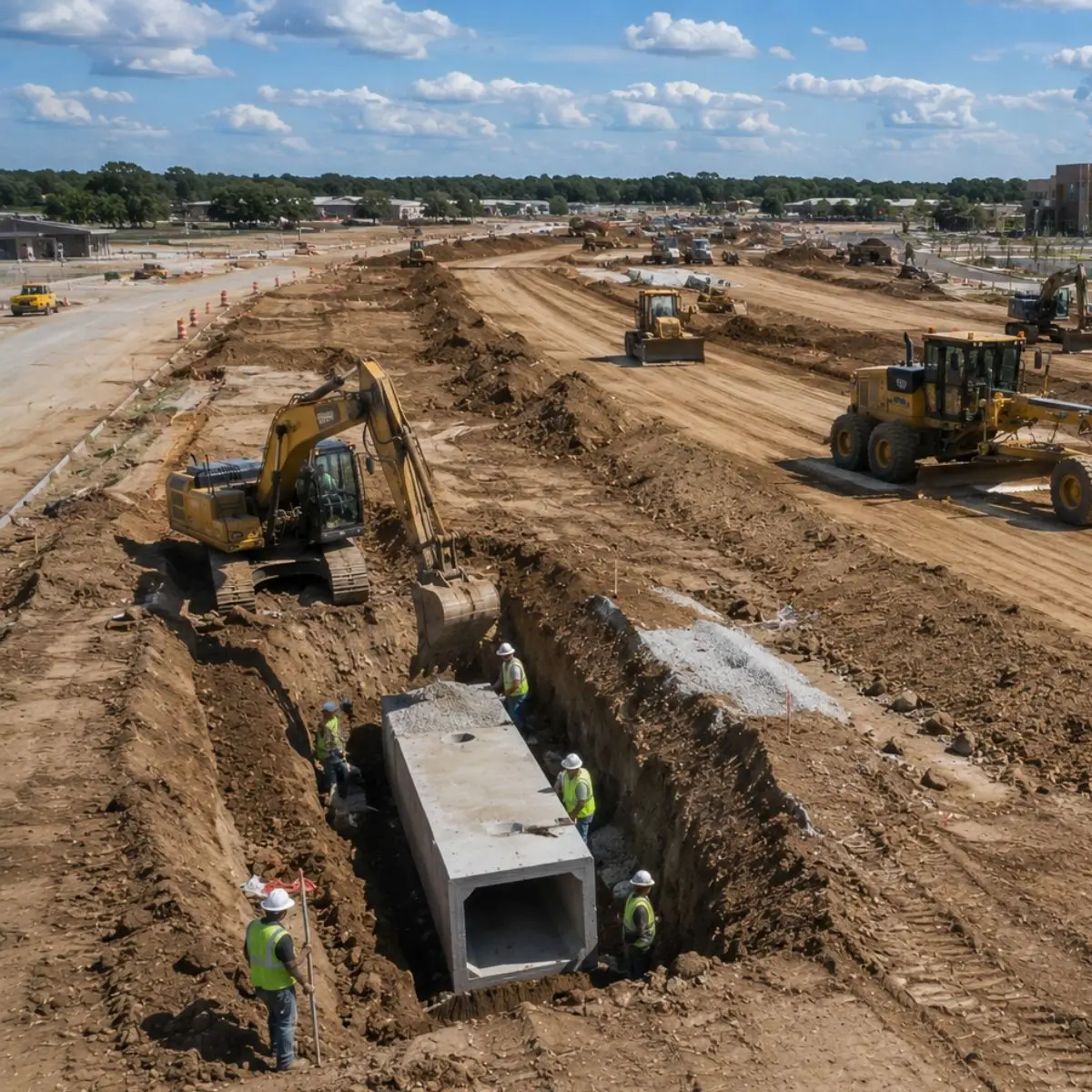
Have a site that needs excavation?

Send the address, the plans and what needs to be dug. We will tell you how the cut balances, what protective systems the depths call for, what the city is likely to want, and what it costs to get the work below grade done right.
Who we work for

Projects we support

From a single building footprint to a multi-acre development, the principle is the same: dig what the design needs, keep crews safe while it is open, and put back ground that will carry what goes on top.

Commercial and retail sites

Foundation excavation, utility trenching and cut-to-fill for retail, office and mixed-use development.

Industrial and warehouse development

High-volume excavation and undercut for large building pads, truck courts and heavy-duty paving.

Multifamily communities

Building-by-building excavation and utility trenching sequenced so each phase is ready when the next crew arrives.

Municipal and public infrastructure

Excavation for public facilities, roadway subgrade and drainage, with the documentation public work requires.

Utility and storm systems

Trenching, earthwork and backfill for water, sewer, storm and dry utility installation.

Detention and retention ponds

Pond excavation to the drainage design, with spoil reused as site fill where the grading plan allows.
The IRONWILL difference

How we approach excavation

Construction-first mindset

We dig to set up the next trade, not just to finish a hole.

Safety before production

Protective systems and locates in place before anyone works below grade.

Material balanced on site

Spoil reused as fill where the design allows, trucked where it does not.

One team, full scope

Clearing, excavation, grading, pads and site prep under one contractor.
Service area

Excavation across Dallas-Fort Worth and North Texas

We excavate commercial, industrial, multifamily and municipal sites throughout North Texas, from single building footprints to multi-acre developments. Crews and equipment are based in Dallas, which keeps mobilization short across the region.
If your property is in or around the metroplex, ask — it is usually in range.
Allen
Lucas
Melissa
Richardson
Lewisville
The Colony
Prosper
Celina
Little Elm
Rockwall
Mesquite
Grapevine
Flower Mound
Weatherford
Kaufman
Waxahachie
Wylie
Sherman
Collin County
Send with your inquiry
→

Property address and plans or civil set

→

What needs to be dug: mass cut, foundations, trenches or ponds

→

Geotechnical report, if one exists

→

Known utilities and easements on the property

→

Target schedule and site access limits

FAQ

Excavation FAQ

What is excavation in construction?

Excavation is the removal of soil and rock below the existing ground surface to make room for foundations, below-grade structures, utility lines, detention ponds or replacement fill. On a construction site it follows clearing and runs alongside grading, and it includes preparing the bottom and backfilling once the work below grade is in place.

What is the difference between excavation and grading?

Grading reshapes the surface to design elevations and slopes across the whole site. Excavation goes below the surface to a designed depth for foundations, trenches, ponds and undercuts. Most commercial sites need both, and planning them together lets excavated material become grading fill instead of trucked-off spoil.

When does a trench need shoring or a trench box?

Under OSHA rules, a trench 5 feet or deeper needs a protective system such as sloping, benching, a trench shield or shoring, unless it is cut entirely in stable rock. Trenches deeper than 20 feet require a system designed by a registered professional engineer. The right system depends on the soil type, the depth and the space available next to the trench.

Do I need to call 811 before excavating in Texas?

Yes. Texas law requires a call to 811 at least two business days before digging so member utilities can mark their lines. Private lines on commercial property, such as site lighting or irrigation, may not be marked through 811 and can need a separate private locate.

What permits are needed for excavation in Dallas-Fort Worth?

It depends on the city and the size of the disturbance. Most metroplex cities require approved civil plans, and some a separate grading or site permit, before earthwork on a commercial site. Any project disturbing one acre or more also needs coverage under TCEQ’s Construction General Permit and a stormwater pollution prevention plan.

What happens to the excavated soil?

Where the geotechnical report allows, excavated soil is reused on site as grading fill, which is usually the cheapest outcome. Material that is unsuitable or in excess of what the site needs is hauled to an approved disposal site, and select fill is imported where the design calls for it.

Why does backfill settle, and how do you prevent it?

Backfill settles when it is placed too thick or too wet or dry to compact properly. We place backfill in lifts, control moisture, compact each lift to the project specification and coordinate density testing so the trench or wall backfill is verified before paving or slabs go on top.

How much does excavation cost?

Pricing depends on volume, depth, soil and rock conditions, how much material can stay on site, haul distance, protective systems for deep cuts, access and schedule. Balancing cut and fill on site and sequencing excavation with grading usually lowers the total more than any unit price does.

How long does excavation take?

A single building footprint or short utility run can take days. Mass excavation and site-wide utility work on larger developments run from weeks to months depending on volume, depth, weather and how the work is phased with other trades. Wet clay is the most common delay in North Texas.

Can excavation be combined with grading and site preparation?

Yes, and it is usually faster and cheaper that way. We handle clearing, excavation, grading, erosion control, pad preparation and paving subgrade under one contractor, so a site moves to build-ready without a second mobilization between phases.