

Selective Demolition · Texas and Oklahoma

Selective Demolition Services Across Texas and Oklahoma

Taking out what has to go while everything around it stays in service. IRONWILL Earthworks removes structures, slabs and pavement on commercial, industrial and public sites across Texas and Oklahoma, sequenced around the surveys, notices and utility cut-offs that have to clear before a machine can legally start.

Lateral
Vertical
Partial structural
Concrete & pavement
Utility-aware
Dallas-based

Short mobilization across the metroplex

Precision over brute force

Demolition planned, not rushed

Utility-aware execution

Protecting what has to stay standing

Demolition through site prep

Cleared, graded and construction-ready

When redevelopment starts

Demolition is a sequencing problem before it is a machine problem

The machine work on a demolition is the short part. What decides the start date is a stack of documents with numbers attached to them: an asbestos inspection of the building, a notice to the state filed ten working days out, an abatement scope if the inspection finds regulated material, a written engineering survey of what is coming down, utility disconnects arranged with each utility, and a one call notice before anything goes into the ground.

We work those items backward from the date you need the site. Most of them are the owner's to file and two of them are licensed specialties we are not licensed for, so our value is knowing which ones are already moving, which ones nobody has started, and what each one does to the calendar. Then we take the structure down in an order that protects what is staying, and grade the ground behind it so the next trade is not waiting on a second mobilization.

Below: what selective demolition is, where it parts company with full demolition, what we remove and how that removal is measured, the notice and survey calendar with the number each item carries, and the order we work in. Demolition is more than 90 percent of the construction and demolition debris generated in the United States11, so what happens to the material is part of the scope rather than an afterthought.

Definition

What is selective demolition?

Selective demolition is the removal of specific structures, sections or materials from a site while the utilities, adjacent buildings, pavement and occupied space around them stay intact and, usually, in use. It is what makes an expansion, a remodel, a phased redevelopment or an infill build possible without clearing a property to bare ground first.

The difference from full demolition is not a matter of degree, it is a different job. Something on the site has to survive, which means the work is planned around protection and isolation rather than around production. The equipment gets smaller, the sequence gets longer, hand work replaces machine passes at every interface, and the schedule carries hold points where a utility has to be capped or a wall braced before the next step.

The failures are specific and they are all planning failures rather than machine failures. A service line clipped because nobody located it takes a neighboring tenant offline. A slab cracked by a tracked machine that was too heavy for it becomes somebody's subgrade problem two trades later. A start without the state notice on file stops the job outright, and the notice cannot be backdated.

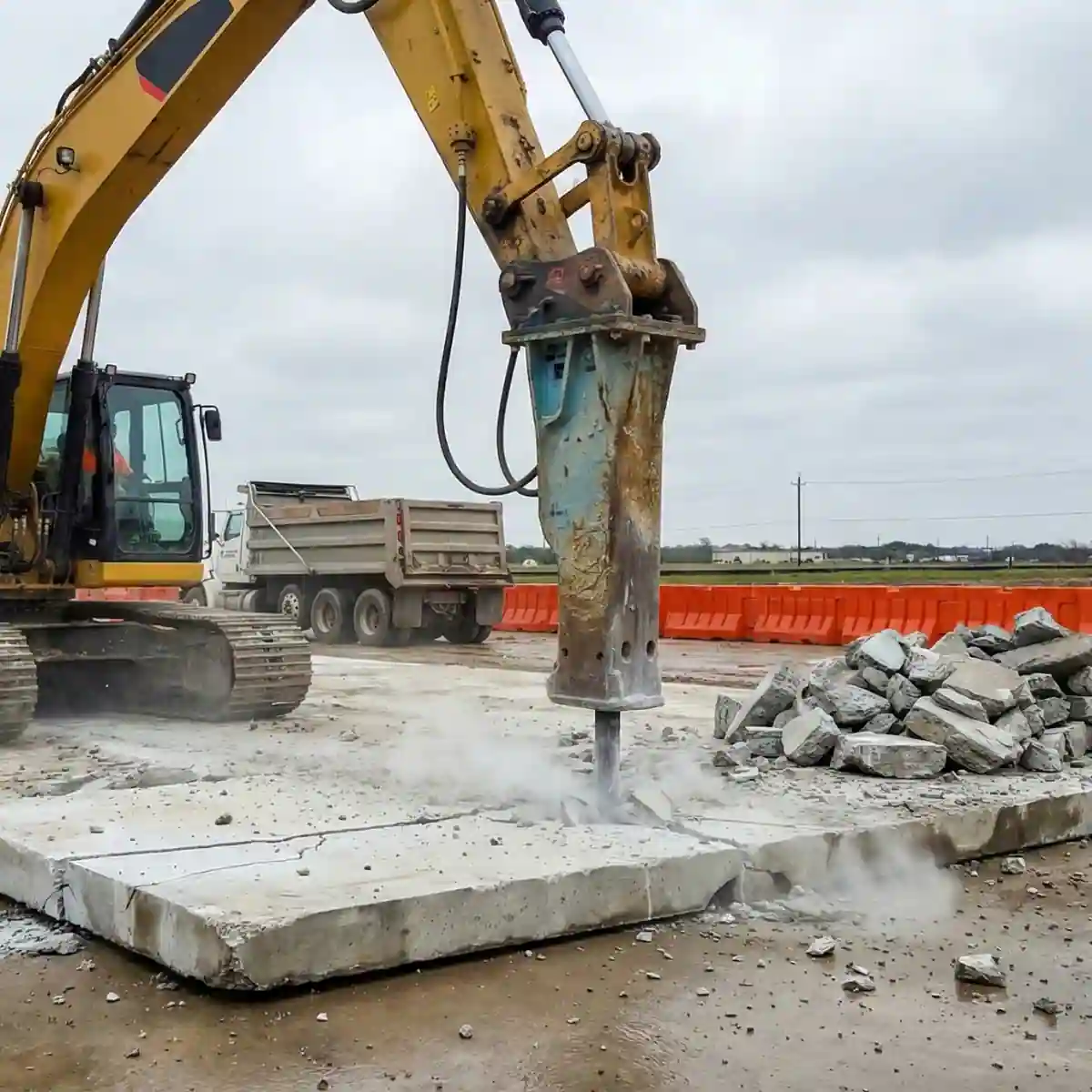
A large excavator equipped with a hydraulic hammer attachment, precisely breaking a thick concrete slab.
Often confused

Selective demolition vs. full demolition: what’s the difference?

Full demolition asks how fast the building can come down. Selective demolition asks what has to still be standing when it does, and that question changes the equipment, the sequence and the number of days.

Full demolition

The whole structure comes out. Nothing on the property is being kept in service, so the work runs continuously with the largest machine the site will take, and the constraints are the property line, the notices and the haul.

Selective demolition

Named elements come out and the rest keeps working. The building may be occupied through it, the power and water may stay live, and a wall or a slab may have to be saw-cut to a line rather than broken to it. Protection and isolation are the scope, not an overhead on it.

Which one your site needs

It is settled by what is staying: a live service, a shared wall, a tenant still trading, a slab you intend to build on. If anything has to survive, the work is selective and it needs to be scoped that way at bid, because the protection is most of the labor.

Most redevelopment is both at once. One structure comes out whole while the pavement, the utilities and a second building are worked around. We scope the two together, so the boundary between them is a line on a plan rather than a change order argued in week three.

Scope

What we remove, and how it is measured

Slabs, pavement and foundations

Concrete and asphalt taken out to the elevation the next phase needs, saw-cut to neat lines where something adjoining is staying10. Removal of this kind is measured by the square yard regardless of thickness, or by the cubic yard in its original position, which is why a thickness surprise changes the quantity and not the unit10.

Structures and walls

Buildings and vertical elements brought down in a planned direction and order. Where a wall is pulled rather than picked apart, every steel member affected is cut free first and cornices and ornamental stonework come off before the pull3.

Partial structural removal

Sections taken out of a building that stays standing and often stays occupied. The federal rules are prescriptive here: openings cut in a floor extend the full span between supports, and a floor arch is not started until it and the floor area for twenty feet around it are clear2.

Curb, gutter and hardscape

Curb, gutter, barrier, islands and sidewalk removed as their own quantity. Curb and barrier are measured by the foot, and a retaining wall by the square yard of its front face from the top of the wall down to the top of the footing10.

Utility-aware sequencing

Lines located and protected where they stay live, and capped or controlled outside the building line where they do not, with the utility notified before the work rather than during it1. Anything that puts a machine into the ground afterward runs behind a one call notice9.

Debris, and what it becomes

Material sorted where the site allows, loaded and hauled, and the ground left graded and staged. Broken concrete is separated because it has a second life as base rather than as fill: crushed concrete is Type D flexible base in the state specification, subject to being free of reinforcing steel, under 1.5 percent deleterious material, and at or below 3,000 parts per million sulfate10.

The calendar

Ten working days, and the six other things ahead of the machine

Every item below is someone's obligation before demolition can begin, and each one carries a number. The two at the top are the ones that most often move a start date, because a notice filed late is not curable by working faster.

The demolition calendar: what has to happen first, who does it, and how far ahead
StepWhat the rule requiresWho performs itLead time
Asbestos inspectionThoroughly inspect the affected facility for asbestos, including Category I and Category II nonfriable material, before the demolition commences4A licensed inspector, consultant or management planner. Texas requires licensed persons to perform the survey in a public building7Before anything else. It sets whether abatement is on the schedule at all
Notification to the stateWritten notice of intention to demolish, submitted on the state form or online, combining the federal and Texas requirements56The legal owner or a delegated agent. Texas allows delegation in writing to a licensed contractor or consultant, with the responsibility still shared6At least 10 working days, not calendar days, before demolition begins45
Abatement, where it appliesRemove all regulated asbestos-containing material before any activity begins that would break it up, dislodge it, or cut off access to it4A licensed abatement contractor, not the demolition contractor7Sits on the critical path ahead of demolition, with its own notice
Engineering surveyA written survey of the framing, floors and walls, and of any adjacent structure where workers may be exposed, to determine the possibility of unplanned collapse1A competent person for the employer. Written evidence is required1Before employees start demolition operations
Utility cut-offElectric, gas, water, steam and sewer lines shut off, capped or controlled outside the building line, with the utility notified in advance1The utility and the contractor togetherBefore demolition starts. On most sites this is the longest lead item
Lead assessmentWhere lead paint or coatings are present, workers on manual demolition are treated as exposed above the limit until an assessment documents otherwise8The employer, by exposure monitoringBefore the task starts, or the protective measures apply by default
One call noticeNotice to a notification center before excavation, which includes the digging that follows a slab or foundation out of the ground9The excavatorNot earlier than the 14th day and not later than the 48th hour before work begins, excluding Saturdays, Sundays and legal holidays9

The asbestos inspection

Federal rules require the facility to be thoroughly inspected for asbestos before a demolition commences, including the nonfriable categories that a walkthrough would not flag4. In Texas, a public building's survey has to be performed by licensed people, which means the demolition contractor cannot do it and neither can the owner7.

The notice, even with no asbestos

The state's notification combines the federal and Texas requirements in one filing, and it is required before the demolition of a building or facility even when no asbestos is present56. It has to be submitted or postmarked at least ten working days ahead, and the state treats a late or incomplete notice as improper, which can carry enforcement rather than a warning5.

Moving the date is its own filing

A start date is not a target once it is noticed. To begin earlier than the noticed date the owner files an amended notice ten working days before the new date and calls the regional office; to begin later, the amendment goes in before the date already on file6. This is the rule that catches GCs who pull demolition forward when a prior trade finishes early.

Abatement, permits and disconnects

Regulated material found in the survey comes out before any work that would disturb it or block access to it, by a licensed abatement contractor47. City demolition permits, right of way and traffic control approvals and the utility disconnects run in parallel, and the disconnects are usually the item that actually sets the week.

Our part is plain: we do not perform the asbestos survey and we are not an abatement contractor, because both are licensed trades in Texas7. We plan the demolition around them, tell you which items are already moving and which nobody has started, and give you a start date that the paperwork can actually support. Send us the address and the status of the notice and we will work the schedule back from the day you need the site.

How it works

Our selective demolition process

The order matters more than the speed. Each step below either protects something that is staying or clears a document that the next step is not legal without.

01

Walk the site and read the structure

We look at the framing, the floors, the walls and whatever adjoins them, because that is what the written engineering survey has to cover before anyone starts, including any adjacent structure where our people would be exposed1.

02

Clear the notices before booking machines

Inspection complete, state notice filed and dated, abatement closed out if it applied, permit issued, disconnects scheduled. We do not mobilize against a notice that is not yet ten working days old45.

03

Decide the method and the direction

Lateral, vertical or partial, and in which order, so that loads stay where the structure can carry them as material comes off it. Where a machine and ball is the method, the ball is sized against the crane's rated load and the line rather than against the wall3.

04

Isolate, cap and protect

Services capped or controlled outside the building line with the utility notified1, hazardous substances in tanks and lines tested and purged before the work rather than discovered during it1, and dust, access and neighbor protection in place.

05

Take it down under continuing inspection

The competent person keeps inspecting as the work progresses, because weakened floors, walls and loosened material appear during a demolition and not before it, and work stops in the affected area until it is shored or braced3.

06

Separate, haul and hand over graded

Concrete and asphalt split from mixed debris where there is room to stockpile, the rest hauled and disposed of under the applicable regulations10, and the site left at the elevation the next scope starts from.

Why it matters

What the sequence is actually protecting

Three things: the people working inside the structure, the assets around it that are staying in service, and the schedule of every trade behind you. The federal demolition rules read as prescriptively as they do because all three have been lost on jobs that went a step out of order.

How removal is measured, following the conventions in the state specifications10
What comes outHow it is measuredWhat the pay item covers
Concrete pavement, floors, foundations, sidewalks and appurtenancesBy the square yard regardless of thickness, or by the cubic yard of calculated volume, in its original positionBreaking, loading, hauling, and salvaging or disposing of the material
Curb, curb and gutter, concrete traffic barrierBy the foot in its original position. Monolithic or doweled curb is included in the pavement measurementThe same, with footings subsidiary rather than paid separately
Retaining wallsBy the square yard along the front face, from the top of the wall to the top of the footingRemoval of the footing is not measured separately
Asphalt pavement and treated or untreated baseBy the 100 foot station, by the square yard, or by the cubic yard computed by average end areasBreaking, loading, hauling, unloading and stockpiling or disposal

The material side has scale behind it. Demolition generates more than 90 percent of construction and demolition debris in the United States, and of the 600 million tons produced in 2018 about 455 million tons went to a next use, with aggregate the largest destination11. That is the reason we stockpile clean concrete separately where the site has room for it: as Type D base it has a specification and a buyer, and as mixed debris it has neither10.

Adjacent structures survive the work, in writing beforehand

Live services stay live, capped ones stay capped

Occupied buildings keep trading through the phase

A notice that holds, so the start date holds

Continuing inspection as the structure changes

Clean concrete stockpiled as base, not buried as waste

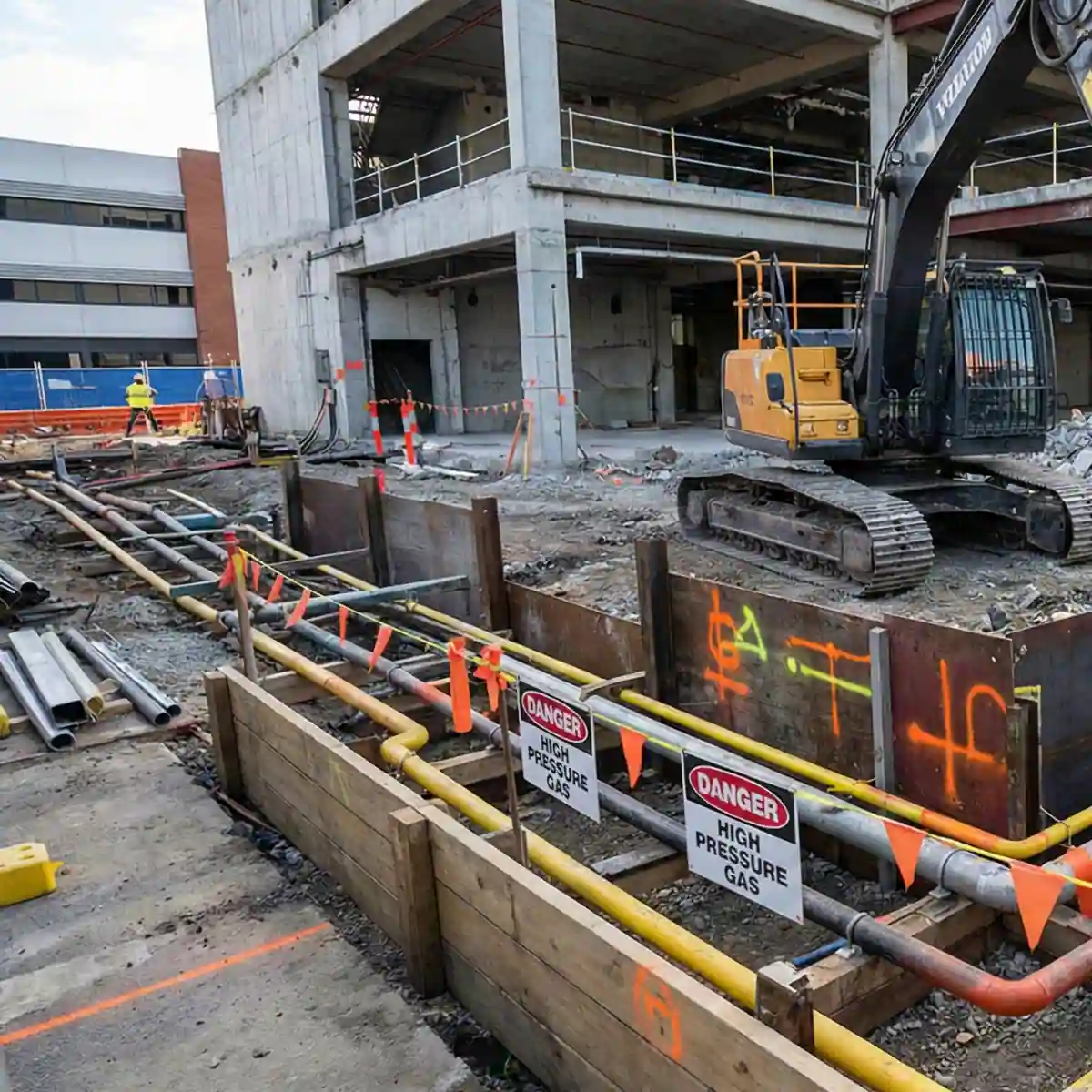
Utility-aware selective demolition protecting existing infrastructure on a Texas construction project.
Who we work for

Projects we support

From one pad to a full structure, the method is the same: establish what survives, clear the notices that govern the rest, and leave ground the next scope can start on.

Commercial redevelopment

Retail, office and mixed-use sites where a building or its pavement has to come out before the new footprint can be staked, often with part of the center still open.

Occupied and phased sites

Work alongside tenants who are still operating, where access, fire lanes, dust and noise are planned before mobilization rather than negotiated afterward.

Facility expansions and renovations

Partial structural removal for additions and remodels, where the rest of the building stays in use and the interfaces are saw-cut rather than broken10.

Parking, drive aisle and pavement removal

Asphalt and concrete removal ahead of repaving or redevelopment, including curb, gutter, islands and sidewalk as their own measured quantities10.

Public and infrastructure work

Removal of structures, pads and hardscape ahead of utility and roadway work, measured and documented the way the owner's specification requires.

Demolition into site preparation

Demolition as the first phase of a larger scope, handed straight into clearing, grading and erosion control under one contract.

Have something that has to come down?

Send the address, what is coming out, what has to stay, and where the asbestos notice stands. We will tell you the earliest start date the paperwork supports, how the work should be sequenced, and what the site will look like when we hand it over.

The IRONWILL difference

How we approach demolition

The calendar before the machine

Notices, surveys and disconnects worked backward from your date, not discovered on site.

Written survey, continuing inspection

The structure assessed in writing first and watched by a competent person throughout13.

Handed over at grade

The site left at the elevation the next scope starts from, not just emptied.

One contract through site prep

Demolition, clearing, grading and erosion control sequenced without a second mobilization.

Service area

Selective demolition across Texas and Oklahoma

We demolish on commercial, industrial, multifamily and public sites across Texas and Oklahoma: flatwork demolition, from a single pad in a working center to a parking lot, and structural demolition up to a full building on a redevelopment parcel, with the concrete hauled to a crushing site rather than a landfill. Crews and equipment are based in Dallas.

If your site is in or around the metroplex, ask - it is usually in range.
Dallas
Fort Worth
Plano
McKinney
Frisco
Allen
Richardson
Carrollton
Lewisville
Denton
The Colony
Prosper
Celina
Little Elm
Rockwall
Garland
Mesquite
Arlington
Grapevine
Flower Mound
Irving
Weatherford
Kaufman
Waxahachie
Wylie
Collin County
Send with your inquiry
→

Address, and what is coming down

→

What stays: services, structures, slabs

→

Asbestos inspection and notice status

→

Permit and utility disconnect status

→

Access limits and the date you need the site

FAQ

Selective demolition FAQ

What is selective demolition?

The removal of named structures, sections or materials while the utilities, buildings and paving around them stay intact and usually in use. The defining feature is that something on the site has to survive the work.

How is it different from full demolition?

Full demolition is a production job with the largest machine the site allows. Selective demolition is a protection job: hand work and saw cuts at every interface with what is staying, hold points for capping and bracing, and a longer sequence for the same footprint.

Is an asbestos inspection required before demolition?

Yes. Federal rules require the facility to be thoroughly inspected for asbestos, including Category I and Category II nonfriable material, before the demolition commences4. In Texas a public building's survey must be done by licensed people, so neither the owner nor we can perform it7.

How far ahead does the state have to be notified?

At least ten working days, and the state is explicit that they are working days rather than calendar days5. The filing is required before demolishing a building even when the survey finds no asbestos, and an incomplete or late notice is treated as improper5.

Can the noticed start date be moved?

Yes, but it is a filing rather than a phone call. Starting earlier needs an amended notice ten working days before the new date plus a call to the regional office; starting later needs the amendment in before the date already on file6.

Who has to sign the notification?

The legal owner or a delegated agent. Texas rules let an owner delegate the filing in writing to a licensed contractor or consultant, but the responsibility stays shared with the owner6.

What does the engineering survey cover?

The condition of the framing, floors and walls, the possibility of unplanned collapse, and any adjacent structure where workers could be exposed. The employer has to hold written evidence that it was done before demolition starts1.

What happens to the concrete and asphalt?

Clean concrete is stockpiled separately wherever the site has room, because crushed concrete qualifies as Type D flexible base if it is free of reinforcing steel, under 1.5 percent deleterious material and at or below 3,000 parts per million sulfate10. Mixed debris has no such destination and is hauled for disposal.

Is lead paint a separate problem from asbestos?

Yes, and it runs on a different rule. Where lead coatings are present, workers doing manual demolition are treated as exposed above the limit until monitoring documents otherwise, so the protective measures apply by default rather than on a finding8.

Can demolition be coordinated with grading and site prep?

Yes, and it shortens the calendar. The crew that takes the structure down already knows what is under it, so the ground goes straight into clearing, grading and erosion control without a second mobilization or a handoff meeting.

After demolition comes the grade: read about commercial site grading, or request a bid.

Sources

Every number and every rule on this page is cited here. Reviewed September 17, 2026.

  1. 29 CFR 1926.850, Preparatory operationsOccupational Safety and Health AdministrationThe written engineering survey by a competent person, the check of adjacent structures, utilities shut off or capped outside the building line with the utility notified in advance, and the testing and purging of hazardous substances.
  2. 29 CFR 1926.855, Removal of walls, floors, and material with equipmentOccupational Safety and Health AdministrationFloor openings extending the full span between supports, and the twenty foot clearance required before a floor arch is removed.
  3. 29 CFR 1926.859, Mechanical demolitionOccupational Safety and Health AdministrationContinuing inspections by a competent person as the work progresses, demolition ball limits against the crane's rated load and line strength, and steel cut free and stonework removed before a wall is pulled.
  4. 40 CFR 61.145, Standard for demolition and renovation (NESHAP Subpart M)Code of Federal Regulations, U.S. Government Publishing Office, 2024The thorough inspection before commencement, the ten working day notice, the regulated material thresholds of 260 linear feet on pipes and 160 square feet on other components, and the requirement to remove regulated material before anything disturbs it.
  5. Notifications, Asbestos ProgramTexas Department of State Health ServicesNotice required before demolition of a building or facility even when no asbestos is present, no less than 10 working days and not calendar days ahead, with late or incomplete notices treated as improper.
  6. Asbestos Abatement and Demolition Notifications FAQsTexas Department of State Health ServicesThat the state form combines the federal and Texas requirements, who may sign and submit it, the ten working day rule in the Texas Asbestos Health Protection Rules, and the amendment rules for an earlier or later start date.
  7. General Asbestos FAQsTexas Department of State Health ServicesThat a survey is required before renovation or demolition, and that Texas rules for public buildings require licensed persons to perform the survey and to remove the asbestos.
  8. 29 CFR 1926.62, Lead in constructionOccupational Safety and Health AdministrationThe action level of 30 micrograms per cubic meter, and the rule that workers on manual demolition where lead coatings are present are treated as exposed above the limit until an exposure assessment documents otherwise.
  9. Texas Utilities Code, Chapter 251, Underground Facility Damage Prevention and SafetyTexas Constitution and StatutesNotice to a notification center not earlier than the 14th day and not later than the 48th hour before excavation begins, excluding Saturdays, Sundays and legal holidays.
  10. 2024 Standard Specifications for Construction and Maintenance of Highways, Streets, and BridgesTexas Department of Transportation, 2024Item 104 Removing Concrete and Item 105 Removing Treated and Untreated Base and Asphalt Pavement for the measurement conventions and saw-cut requirement, and Item 247 Flexible Base for crushed concrete as Type D material, free of reinforcing steel, under 1.5 percent deleterious material and at or below 3,000 parts per million sulfate.
  11. Sustainable Management of Construction and Demolition MaterialsUnited States Environmental Protection AgencyThat demolition accounts for more than 90 percent of construction and demolition debris generation, and that of 600 million tons generated in 2018 about 455 million tons went to a next use, led by aggregate.