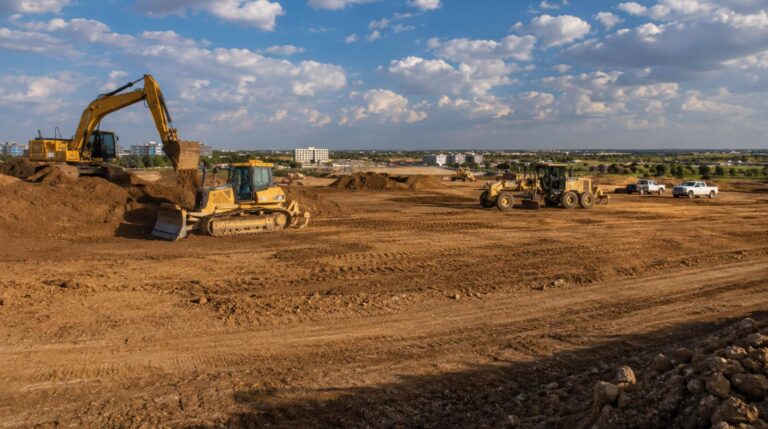
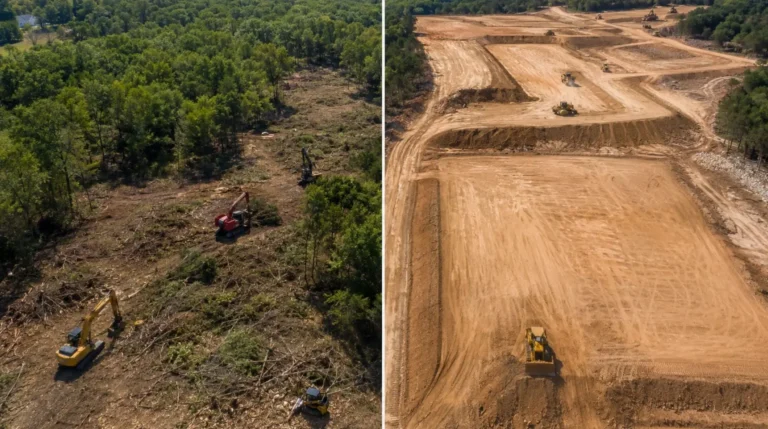
In earthwork, dirt is never just dirt.
The soil beneath a commercial development affects how the site drains, how efficiently it can be worked, how building pads are prepared, and how the project performs long after the equipment leaves.
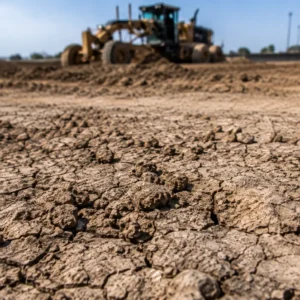
Across many parts of Dallas-Fort Worth and North Texas, clay-rich soils are part of that equation. Clay can become hard and cracked when dry, soft and difficult to work when saturated, and can expand or contract as moisture conditions change.
That makes proper grading especially important.
Grading is not simply about leveling a property. It establishes how water moves across the site, creates the elevations required for construction, and prepares building pads, paving areas, and access points for the work that follows.
For developers, builders, and general contractors working across Dallas, Fort Worth, Frisco, McKinney, Plano, Allen, Prosper, Celina, Denton, and surrounding North Texas communities, grading the site correctly from the beginning can prevent much bigger problems later.
At IRONWILL Earthworks, that understanding is built into how we approach commercial grading, excavation, and site preparation.
Why Clay Changes the Grading Equation
Clay-rich soils respond strongly to moisture.
When wet, they can swell, soften, and become harder to compact. When dry, they may shrink and crack. Those characteristics do not make a site unsuitable for construction, but they do make drainage, moisture control, and compaction more important.
If water consistently collects in one area, the soil there can remain wetter than the rest of the site. If runoff flows toward a building pad or paving area instead of away from it, construction conditions can deteriorate quickly.
That is why an experienced grading contractor is not just asking whether the site is at the correct elevation.
The bigger question is:
Where will the water go when it rains?
Good Grading Starts With Understanding the Site
Before major dirt work begins, the project team needs to understand the existing conditions.
That includes current elevations, natural drainage patterns, soil conditions, utilities, access points, proposed grades, and the locations of future buildings, pavement, and drainage infrastructure.
Even a site that looks relatively flat can have drainage challenges. Small elevation differences can determine whether stormwater moves toward a designed drainage system or collects where construction needs to happen.
Early site analysis helps identify those issues before mass grading begins.
Proper Grading Is Really About Controlling Water
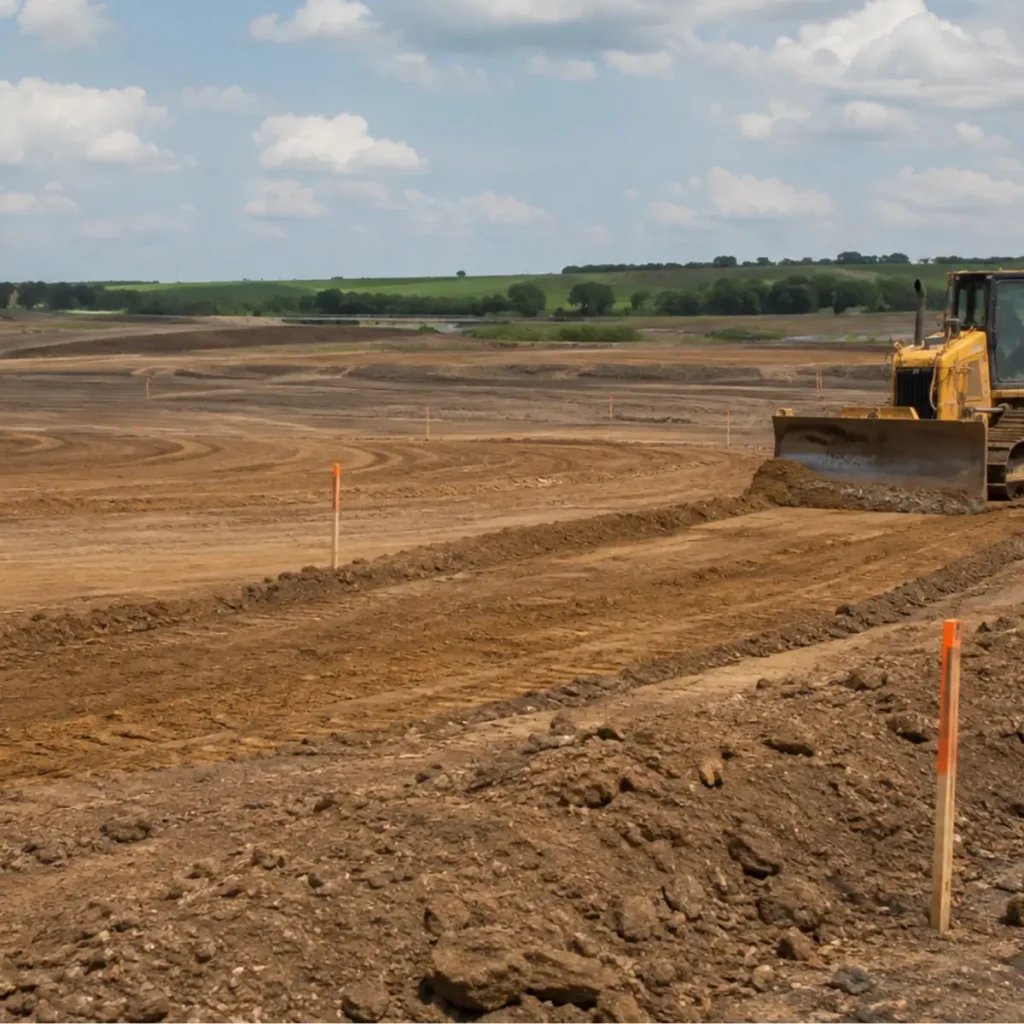
One of the biggest misconceptions about grading is that the goal is to make the site flat.
In reality, the goal is to create the right slopes and elevations.
Water needs somewhere to go.
A properly graded site directs runoff away from building areas and toward the drainage systems shown in the civil plans. Parking lots, drives, building pads, landscaped areas, and detention systems all depend on those elevations working together.
This matters throughout North Texas, where a heavy storm can quickly expose weak points in an active construction site.
Poor grading can create standing water, soft work areas, erosion, difficult equipment access, and delays for the trades that follow.
IRONWILL’s commercial site grading services focus on both accurate elevations and how the site needs to function during construction.
Moisture and Compaction Matter Too
Getting the site to the correct elevation is only part of the job.
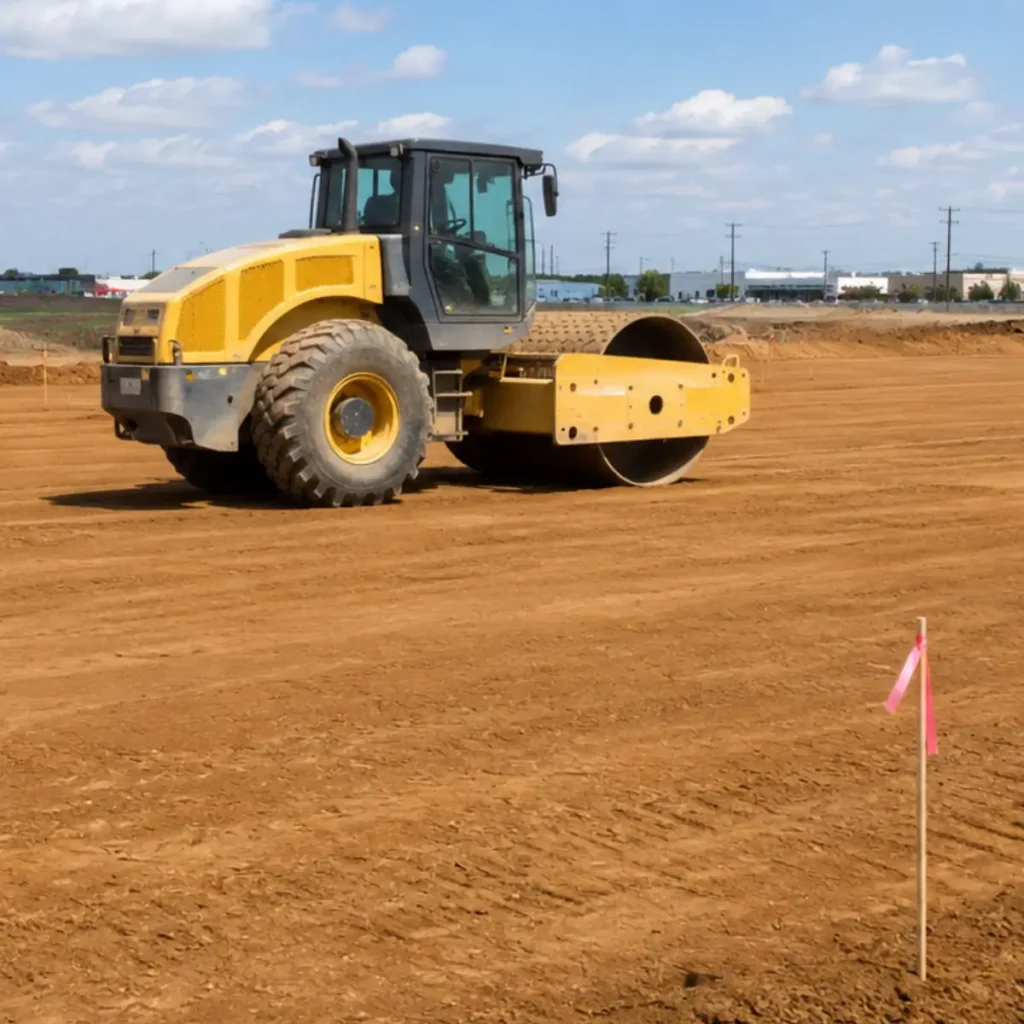
Clay-rich soils can be difficult to compact when they are either too wet or too dry. Depending on the geotechnical requirements, soil may need to be moisture-conditioned before being placed and compacted.
This is particularly important for building pads and paving areas.
A surface can look smooth and construction-ready while still needing additional work below grade. That is why IRONWILL’s earthwork services include mass grading, pad preparation, paving subgrade preparation, and soil management.
The goal is not simply to reach grade.
It is to create ground that is properly prepared for what comes next.
What Happens When Grading Is Wrong?
Grading problems rarely stay confined to the earthwork phase.
A low area that holds water can affect utility crews. Wet soil can delay compaction. Incorrect elevations can create problems for paving, concrete, drainage, and vertical construction.
Getting the grading right helps establish:
- Positive drainage
- Stable building pad areas
- Proper elevations for pavement and access
- Better compaction conditions
- Reliable construction access
- A smoother handoff to future trades
That is why grading should be treated as one of the foundational phases of site development rather than simply another line item in the dirt-work scope.
Why North Texas Experience Matters
North Texas sites can vary significantly.
A redevelopment project in Dallas may involve tight access and existing utilities. A large tract in Prosper or Celina may require extensive mass grading. Projects in Frisco, McKinney, Fort Worth, Denton, or Sherman may each present different combinations of soil, drainage, elevation, and construction challenges.
There is no single grading approach that works everywhere.
Plans and geotechnical recommendations define the requirements. Experienced field crews turn those requirements into a site that actually works.
IRONWILL brings that local experience to large-scale earthwork projects throughout North Texas, including commercial, industrial, multifamily, municipal, and infrastructure projects.
Proper Grading Sets the Foundation
On clay-rich North Texas sites, proper grading helps control runoff, establish construction elevations, support compaction, prepare building and paving areas, and create better working conditions for the rest of the project.
It is not simply about moving dirt.
It is about preparing the ground so every phase that follows has a better starting point.
Need Commercial Grading in North Texas?
IRONWILL Earthworks provides excavation, mass grading, site preparation, pad preparation, paving subgrade preparation, erosion control, and related earthwork services throughout Dallas-Fort Worth and North Texas.
Frequently Asked Questions
Clay-rich soils can expand, contract, retain moisture, and become difficult to compact when conditions are not right. That makes drainage, moisture control, and proper grading especially important.
Grading does not change the natural properties of the soil, but it helps manage surface drainage, reduce unwanted water accumulation, and establish proper elevations for building and paving areas.
Proper drainage helps move stormwater away from building pads, pavement, and active work areas while directing runoff toward the drainage systems designed for the site.
Yes. IRONWILL Earthworks provides grading, excavation, site preparation, pad preparation, paving subgrade preparation, erosion control, and related earthwork services across Dallas-Fort Worth and North Texas.